

How Ombre Powder Brows Restored Her Confidence
In This Blog: A real-life PMU case study showing how thoughtful planning, pigment science and technique helped create natural-looking ombre powder brows.
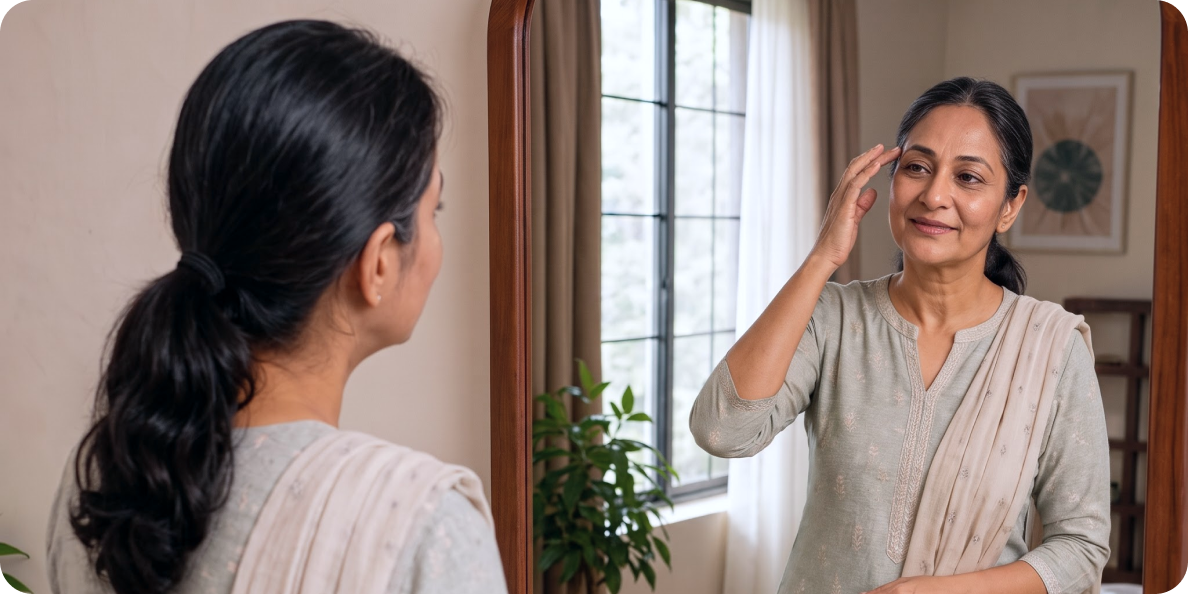
The Woman Behind the Photo
She is Sunita.
She has spent thirty years telling other people to sit up straight and look alive. Then one day, a photo from her school’s Annual Day told her she looked tired. She wasn’t tired. Her eyebrows were just… gone.
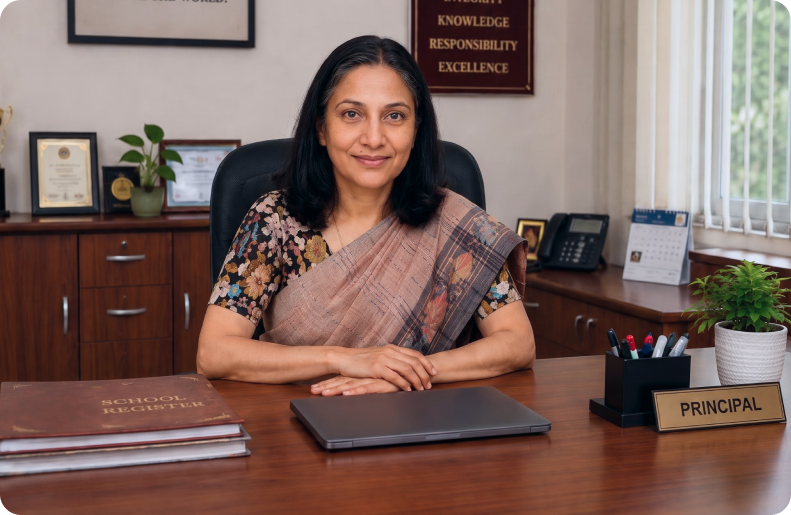
Sunita had always kept beauty simple, with her work and family taking centre stage
Sunita, age 48, is the vice-principal of a school in Ahmedabad. She has a loud voice, a soft heart, and very little patience for fuss. For thirty years, she has worn the same style: hair tied back, a small bindi, and nothing else. No lipstick. No liner. Just her.
Her husband works in insurance. Her daughter is away at college now, studying to be an architect. The house feels quieter these days. Sunita fills the quiet with early mornings, long school days, and evenings listening to old Hindi film songs on the radio.
Then, last year, the school photographer sent her the Annual Day pictures. Sunita almost didn’t recognise her own face. Her eyebrows had thinned so slowly, she never noticed it happening. Now, in the photo, her face looked flat. Tired. Almost blank.
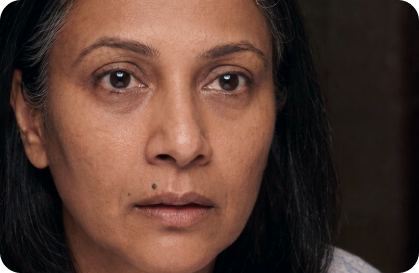
Her face looked different from how she felt and that difference began to bother her.
She never thought about her eyebrows. Not once, in thirty years.
A student asked her that same week, “Ma’am, are you feeling okay? You look sleepy.” Sunita laughed it off. But she went home and stood in front of the mirror for a long time that night.
She felt fine. She felt awake, busy, and sharp as ever. But her face was telling a different story. That gap between how she felt and how she looked started to bother her more than she expected.
Why She Came In?
Sunita almost didn’t book the appointment. “PMU is for young girls who want Instagram brows,” she told the ibrow telecaller on the phone. She was worried it would look fake. Painted on. Too dark, too dramatic, too “done.”
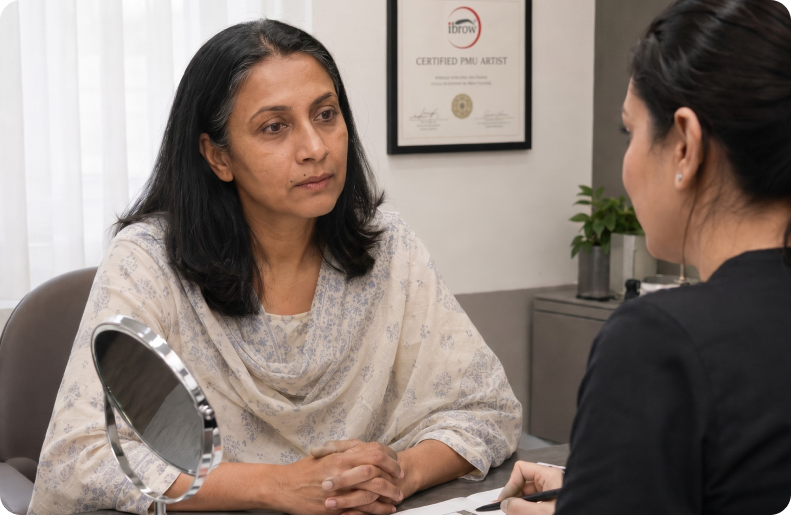
The consultation focused on understanding what Sunita wanted her brows to look like, not imposing a generic brow shape.
She had heard about PMU before. But she never thought she would need it. Until now.
She had one clear question: “Will people be able to tell?”
She also had a quiet fear she didn’t say out loud at first — that at her age, wanting nicer eyebrows made her feel vain. Like she was making a fuss over nothing.
By the time she sat down for her consultation, she had softened a little. She just wanted her eyebrows to look like her eyebrows — only clearer. Not bigger. Not bolder. Just there again.
What We Saw?
At the consultation, Neha, the ibrow PMU artist handling her case, looked closely at both eyebrows. This is the part most PMU artists skip too quickly — and it is the part that decides whether the result looks natural or fake.
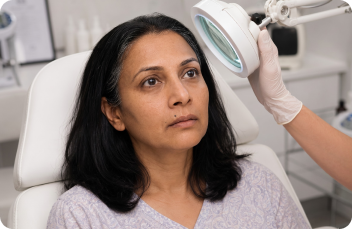
The assessment examined Sunita’s natural brow shape, density, asymmetry and skin undertone before the technique was chosen.
Sunita’s eyebrows were thinning evenly on both sides, mostly through the arch and the tail end. The hair that remained was fine and spaced unevenly, so the lower edge of her eyebrow had no clean line. It looked soft and smudged, not sharp.
Her left eyebrow also sat very slightly lower than her right. This is extremely common. Most faces are not perfectly symmetrical, and this was not a deformity — just a small, natural difference the design would need to work around, not “fix.”
Her skin was Fitzpatrick type IV, a skin-tone category common across India, with a cool undertone. That mattered for pigment choice — a warm brown pigment on cool-toned skin can turn reddish or orange as it heals. Sunita had no old PMU, no scars, and no medical reason to avoid the procedure. Her thinning was simply years of eyebrow threading and normal age-related hair loss, adding up slowly over time.
Why ombre-powder, not microblading?
After the assessment we decided to go with ombre-powder, not microblading. Microblading uses a blade to draw individual hair strokes. It works best on brows with big bald patches that need hair-like lines drawn in. Sunita’s brows were not bald — they were thin and undefined everywhere. Ombre-powder brows use a machine to build up a soft, shaded fill, like the look of brow powder makeup, but permanent. This suited her far better, and it also tends to last longer on mature skin, which holds soft shading better than fine hair-stroke lines.
The Plan
Neha mapped Sunita’s new eyebrow shape first, using her own natural arch as the guide — not a generic “ideal” shape. The design was drawn slightly higher and fuller at the tail on her left side, to visually balance her natural left-side droop, without forcing both eyebrows into an unnatural, identical match.
Pigment and layering:
Neha used ibrow’s real layering technique for mature skin — a warmer, more orange-leaning shade of brown for the earlier passes, then a darker, cooler brown for the later passes. The warm base keeps the healed result from turning ashy; the cooler top layer gives the depth and darkness many Indian clients want.
Coffee Brown liquid pigment mixed with Pecan liquid pigment, in a 3:1 ratio.
Dark Brown liquid pigment mixed with Orange liquid pigment, in a 3:1 ratio, to finish with a deeper, more controlled tone.
Sparkle (wired, 7 speed settings) — the same machine Dr. Gunjan uses herself. Its fine speed control suited the careful, lighter-pressure passes needed on Sunita’s thinner, more mature skin.
3RL for the main soft powder gradient across the brow body, switched to 1RL specifically to sharpen and define her lower border and tail — directly addressing the ill-defined edge that brought her in.
Kept shallow, just past the top layer of skin — going too deep on thinner, more mature skin raises the risk of the pigment blurring or spreading under the skin over time.
Four passes in total — mature skin like Sunita’s typically needs four to five passes to build colour safely, compared to six to eight on younger, thicker skin.
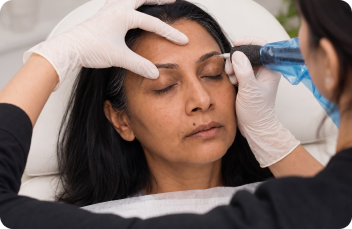
The treatment was built around Sunita’s mature skin, using lighter-pressure passes and carefully layered pigment.
Neha explained the full healing timeline before starting, so Sunita would not panic partway through it — a step that matters as much as the procedure itself.
Procedure Type: Ombre Powder Brows
Skin type
Fitzpatrick IV, cool undertone
Client’s requirementield
Restore definition and density to thinning, ill-defined brows — natural, not bold
Technique
Ombre-powder brows
Machine
Sparkle (wired, 7-speed)
Cartridge
3RL (main fill); 1RL (lower border and tail definition)
Pigment & layering
Passes 1–3: Coffee Brown + Pecan (3:1, warm base) · Pass 4: Dark Brown + Orange (3:1, cooler depth layer)
Number of passes
4 (mature-skin range: 4–5)
Needle depth
Shallow — just past the epidermis
Key consideration
Natural left-brow ptosis — design balanced around it, not corrected
A detailed breakdown of the treatment approach used for Sunita’s mature, thinning brows.
Healing, Step by Step
Immediately After:
Sunita’s eyebrows looked noticeably bold and dark — more like brow makeup than her natural look. This is completely normal. Fresh pigment always looks stronger and more solid than the final healed result. There was very mild redness around both brows, gone within a day.
The First Two Weeks:
Over the following days, the colour darkened slightly more before it began to soften — again, a normal part of healing, not a warning sign. Around the first week, light flaking began, and for a few days her brows looked patchy and faded underneath the flaking skin. This stage worries almost every client, and Sunita was no exception — she messaged ibrow’s WhatsApp support twice, convinced something had gone wrong.
Week Two To Three:
As the flaking finished, her brows briefly looked much lighter than expected — almost like the colour had disappeared. This “light” phase is temporary. The true colour sits under the top layer of healed skin and slowly becomes visible again as the skin finishes settling.
By Day Twenty-One:
Her true, healed colour had fully returned — softer, more matte, and far more natural-looking than the fresh result on day one.
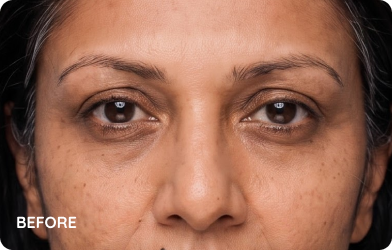
Before treatment: reduced brow density and definition, particularly through the arch and tail.
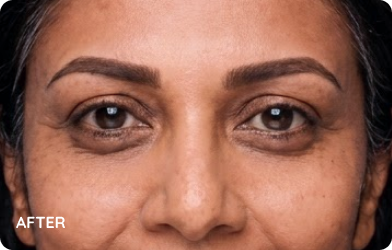
After healing: softly defined, powder-finished brows with restored density and a natural-looking shape.
The Result
Sunita’s eyebrows healed into a soft, even, powder-soft shape. Both sides matched in colour and depth. The lower edge, once smudged and undefined, now had a clean, soft line. It did not look painted on. It looked like her own eyebrows, simply clearer.
She did not tell her class she had “gotten her eyebrows done.” Nobody asked. But nobody asked if she was tired anymore, either.
She stopped avoiding the school photographer.
Small things changed. She stopped avoiding the school photographer. She started keeping her hair a little further back from her face, instead of using it to hide behind. On weekends, she still doesn’t wear makeup — she still doesn’t want to. She just doesn’t need to worry about her eyebrows telling a story her face doesn’t feel.
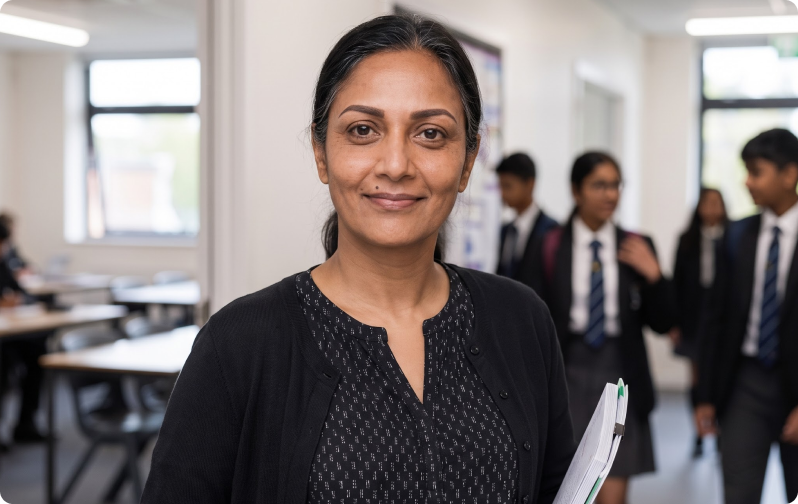
With her brows restored, Sunita returned to her everyday life with restored confidence and worrying about looking tired.
What This Teaches Us
1
A client’s words often hide the real question. Sunita asked about the procedure. What she really wanted answered was, “Will people be able to tell?” Listen for the fear under the question.
2
Natural asymmetry is not a flaw to erase. Sunita’s left-side droop was ordinary and human. The design worked around it, rather than forcing both sides into an artificial match.
3
Skin undertone changes pigment choice, not just skin tone. A warm-toned pigment on cool-toned skin can heal in the wrong direction entirely.
4
The “ugly” healing stages need to be explained before day one, not during day seven. Clients panic during the flaking and light stages far more often when they don’t know it’s coming.
5
Mature, thinning skin rewards a gentler hand. Four measured passes, a warm-to-cool layering strategy, shallow needle depth, and a soft powder technique will usually age better than a heavier, bolder approach.

Medically reviewed by Dr. Gunjan Shah, MBBS, DDV, Founder- President, IAPMU.


Founder & PMU Master Trainer
Dr. Gunjan Shah is the founder of ibrow and a renowned PMU expert dedicated to advancing the colour science, pigment quality and technique standards of Permanent Makeup in India.